Getting Started with TIG Welding
TIG (Tungsten Inert Gas) welding is one of the most versatile and precise welding processes available. It produces clean, strong welds on a wide range of metals including steel, stainless steel, aluminum, and titanium. For beginners, the learning curve can feel steep — but with the right tools and knowledge, you can start producing quality welds quickly.
This guide covers the essential tools and setup you need to begin your TIG welding journey.
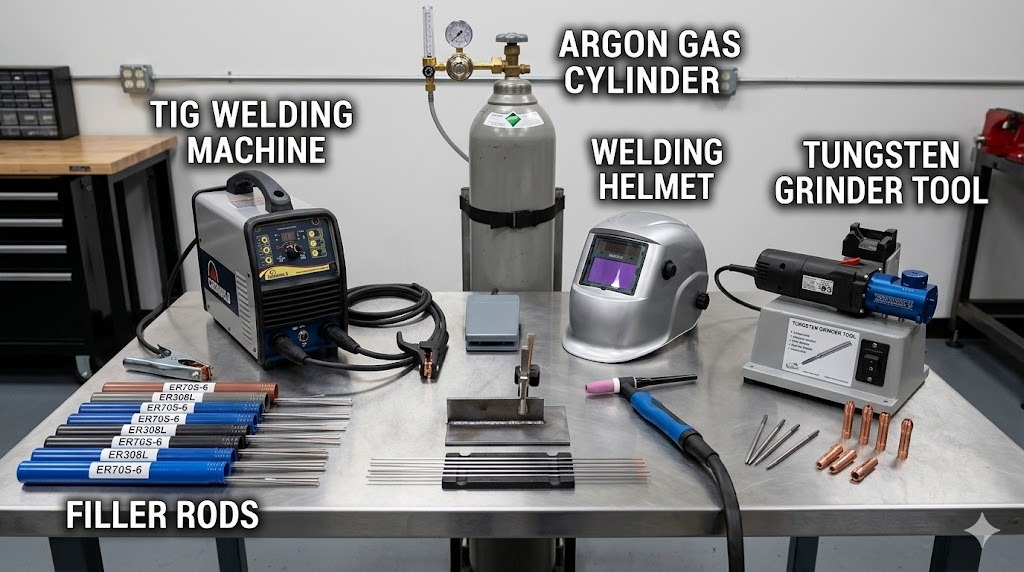
Essential TIG Welding Equipment
1. TIG Welding Machine
Your welder is the heart of your setup. For beginners, a machine with both AC and DC capabilities is recommended — AC for aluminum and magnesium, DC for steel and stainless steel. Look for a machine with adjustable amperage control, pre-flow and post-flow gas settings, and a foot pedal for amperage control.
2. Tungsten Electrodes
The electrode is the consumable that conducts the welding current to the workpiece. Start with 2% thoriated (red tip) for steel and pure tungsten (green tip) for aluminum. As you advance, experiment with ceriated and lanthanated electrodes for better performance across different materials.
3. Tungsten Grinder
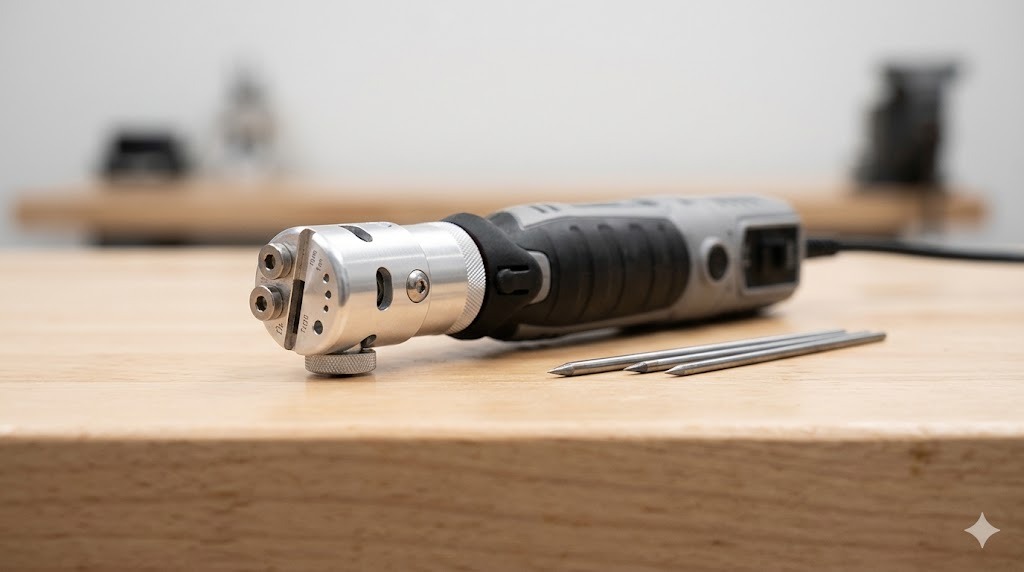
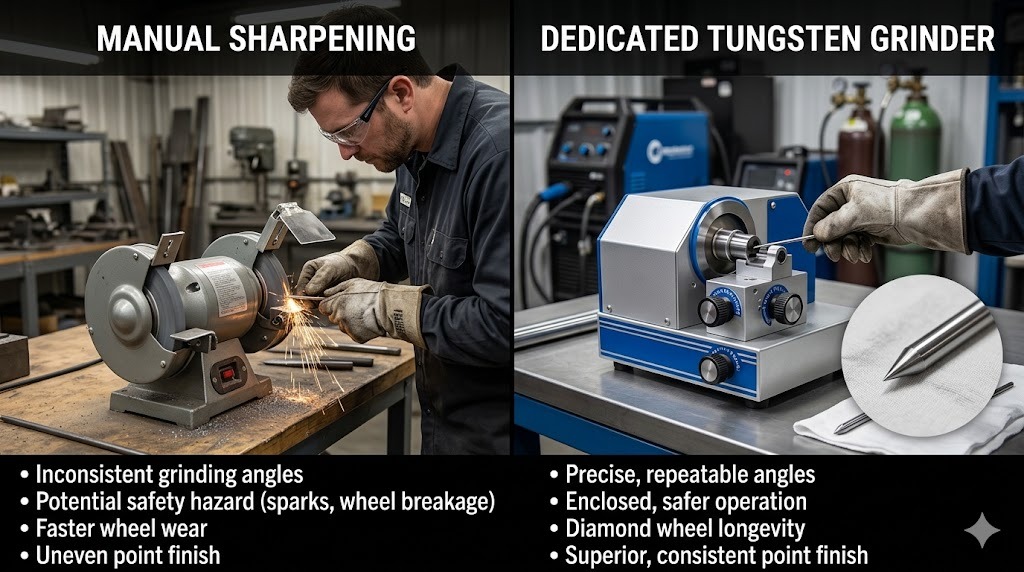
A tungsten grinder is essential for preparing your electrodes with precision. Consistent electrode sharpening leads to a stable arc and better weld quality. While you can grind manually, a dedicated grinder produces repeatable results every time — a game-changer for beginners learning proper technique. The Diduemen tungsten grinder is an excellent choice for both beginners and professionals.
4. Welding Helmet
An auto-darkening welding helmet is a must. Look for one with adjustable shade levels (DIN 9-13), sensitivity control, and a wide viewing area. A clear view of the weld pool is critical for developing good technique.
5. Shielding Gas
100% argon is the standard shielding gas for TIG welding. It protects the weld pool from atmospheric contamination and helps stabilize the arc. For steel, you can use an argon/CO2 mix, but pure argon gives the best results for most applications.
6. Filler Rods
Choose filler rods that match your base material. ER70S-2 or ER70S-6 for mild steel, ER308L for stainless steel, and ER4043 or ER5356 for aluminum. Keep your filler rods clean and dry.
Setting Up Your Workspace
- Ventilation: Ensure adequate ventilation or use a fume extractor. TIG welding produces ozone and metal fumes.
- Cleanliness: Remove paint, rust, oil, and dirt from your workpiece. TIG welding requires clean metal for good results.
- Ground clamp: Attach the ground clamp close to your weld area on clean, bare metal for a solid electrical connection.
- Gas flow: Set your argon flow rate to 15-20 CFH (cubic feet per hour). Too little gas causes porosity; too much creates turbulence.
Getting Started: Your First Welds
- Prepare your tungsten with a tungsten grinder at a 20°–30° angle
- Set your amperage based on material thickness (about 1 amp per 0.001 inch of material)
- Position the torch at a 10°–15° angle from vertical
- Establish the arc using high-frequency start (no contact needed)
- Add filler rod by dabbing it into the leading edge of the weld pool
- Travel at a steady pace — watch the puddle, not the arc
Common Beginner Mistakes
- Using too much amperage — start low and increase as needed
- Dipping the tungsten into the weld pool — if this happens, stop and regrind
- Moving too fast or too slow — practice on scrap metal first
- Poor gas coverage — check your flow rate and avoid drafty areas
Final Advice
TIG welding takes practice. Start with simple beads on flat plate, then progress to butt joints, corner joints, and T-joints. Keep your tungsten properly sharpened with a quality tungsten grinder, and you will see steady improvement in your welds. Happy welding!