Why Proper Tungsten Sharpening Matters
Sharpening your tungsten electrode correctly is one of the most important skills in TIG welding. A properly sharpened electrode produces a stable arc, better weld penetration, and cleaner results. Whether you use a dedicated tungsten grinder or another method, the principles of good sharpening remain the same.
In this step-by-step guide, we will show you how to sharpen tungsten electrodes for perfect TIG welds every time.
Step 1: Choose the Right Tungsten Electrode
Before sharpening, make sure you have the correct tungsten type for your application:
- Pure tungsten (green): Best for AC welding on aluminum and magnesium
- Thoriated 2% (red): Excellent for DC welding on steel and stainless steel
- Ceriated 2% (gray): Good for both AC and DC at lower amperages
- Lanthanated 1.5% (gold): Versatile, works well for both AC and DC
Step 2: Select the Correct Angle
The grind angle determines the arc characteristics:
- 15°–20°: Produces a focused arc — ideal for thin materials and low amperage
- 20°–30°: Balanced arc — suitable for most general-purpose TIG welding
- 30°–45°: Broad arc — best for high-amperage welding and deep penetration
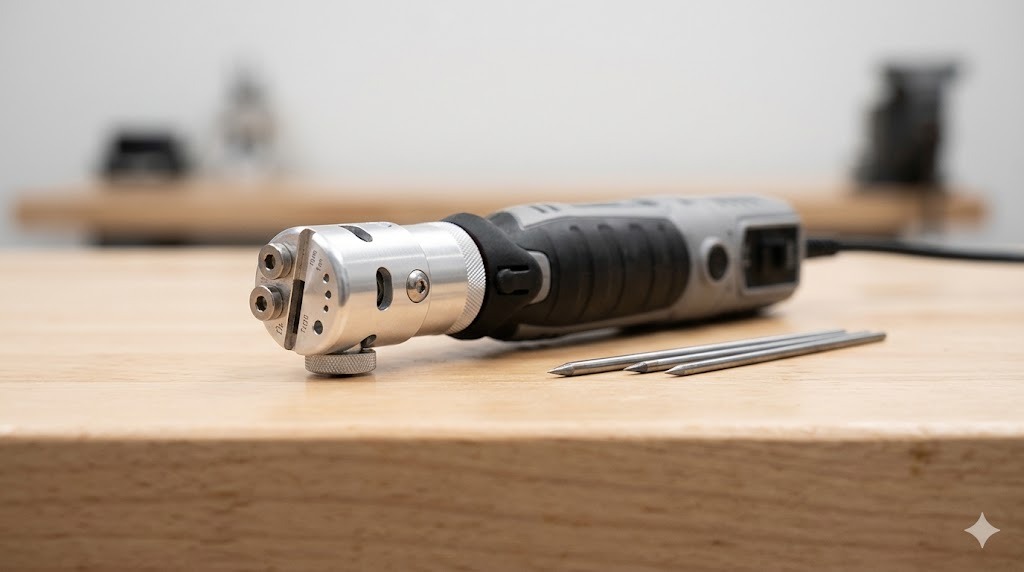
A tungsten grinder with adjustable angle settings makes it easy to switch between these angles with precision.
Step 3: Grind Longitudinally (Not Radially)
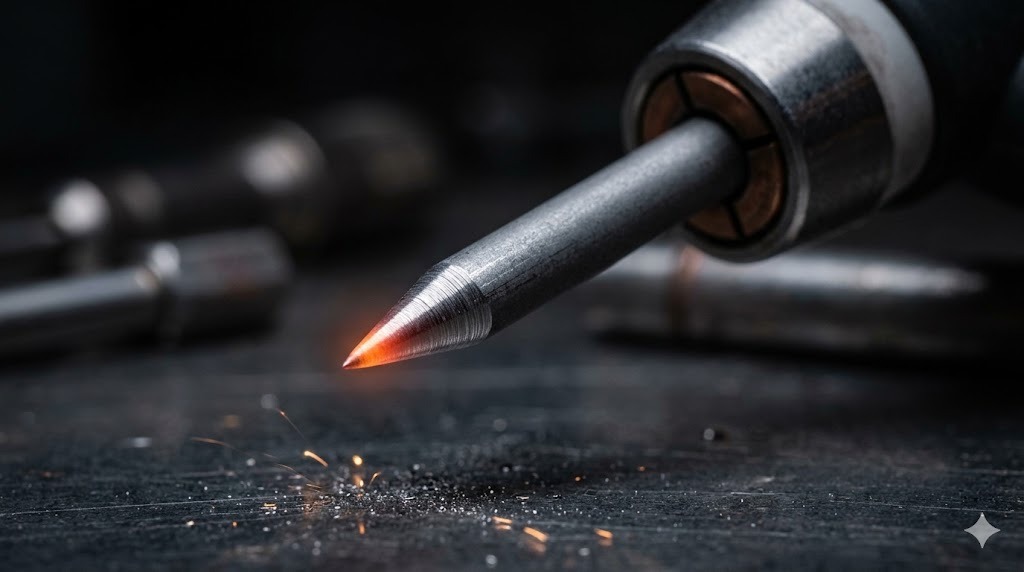
This is the most critical rule: always grind the tungsten lengthwise, not in a circular motion around the electrode. Longitudinal grinding creates grinding marks that run parallel to the electrode axis, which helps the arc travel smoothly to the tip. Radial grinding marks cause the arc to wander, leading to instability and poor weld quality.
A quality tungsten grinder automatically maintains the correct longitudinal grind direction, eliminating this common mistake.
Step 4: Maintain Consistent Pressure
Apply steady, even pressure as you rotate the electrode. Too much pressure can cause overheating and micro-cracks in the tungsten. Too little pressure results in uneven sharpening. A tungsten grinder provides a controlled feed mechanism that ensures consistent pressure every time.
Step 5: Inspect the Tip
After sharpening, inspect the tip under magnification. The point should be clean, sharp, and free of burrs. A small flat at the very tip (about 0.5mm) can help prevent the tip from melting into the weld pool, especially at higher amperages.
Step 6: Keep Tungsten Clean
Contaminated tungsten produces contaminated welds. Always clean the tungsten before sharpening, and store sharpened electrodes in a clean, dry container. Avoid touching the ground tip with bare fingers, as oils from your skin can transfer to the tungsten and contaminate the weld.
Common Mistakes to Avoid
- Grinding crosswise: Causes arc wandering and instability
- Overheating: Can create micro-cracks and weaken the tungsten
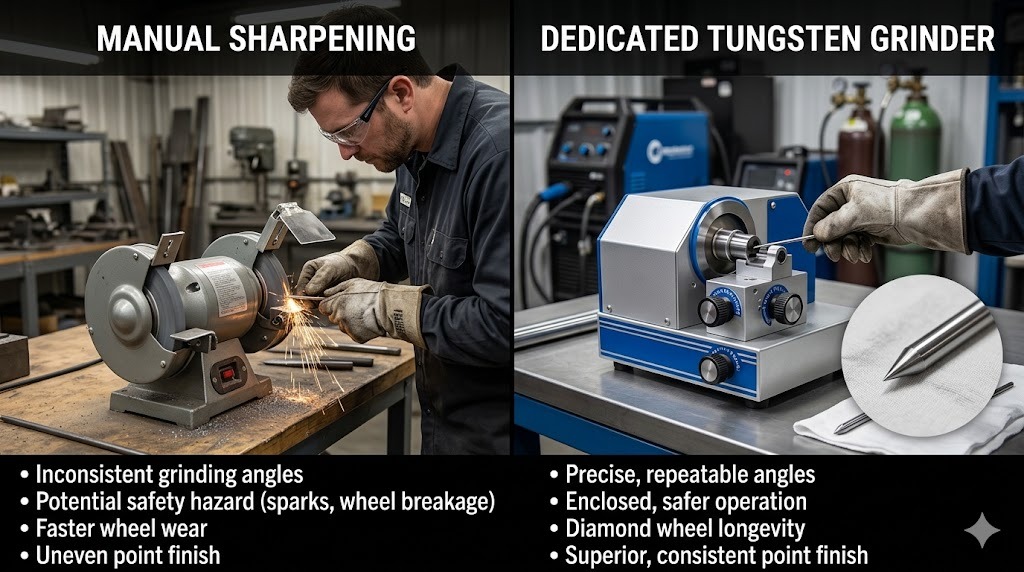
- Inconsistent angles: Leads to varying weld quality between electrodes
- Using contaminated tungsten: Transfers impurities into the weld pool
Final Tips
Investing in a dedicated tungsten grinder is the easiest way to ensure consistent, high-quality sharpening every time. It eliminates guesswork, reduces waste, and saves valuable shop time. Explore the Diduemen tungsten grinder to take your TIG welding to the next level.